
La banca dati dei progetti fornisce informazioni sulle attività concrete della Direzione dello sviluppo e della cooperazione (DSC) e della Segreteria di Stato dell’economia (SECO). È possibile filtrare i progetti per tema, paese e responsabilità di progetto.
Progetti
Banca dati dei progetti
Seleziona
Supporting the Medical Education Reform in Ukraine
01.05.2017
- 30.06.2023
A profound health reform is underway in Ukraine. The currently ill-prepared medical education system is a fundamental component of it. Training curricula are outdated and teaching staff lack essentials skills, capacities and motivation. This project supports the reform of the medical education system for family doctors and nurses, and the strengthening of competencies of healthcare managers. As a result, significant quality improvements of health care delivered to the population are expected.
Progetto concluso
NGO Block Grant
01.05.2017
- 31.12.2022
The NGO Block will support approximately 40 projects with up to maximum CHF 200’000 per project, to implement activities primarily focused on children and youth as well as their family members, related to improving their skills and knowledge on sustainable development.
Progetto concluso
Support to Local Governance Programme (LoGo)
01.05.2017
- 31.12.2019
The programme will reduce the potential for conflict in the Province of Khyber Pakhtunkhwa (KP) by improving the relationship and trust between the people and the State; as part of the ongoing decentralization reform, the programme will strengthen the basis for accountable and participatory local government processes leading to more efficiency of local governments and public services responding to all citizens’ needs, including those of the most vulnerable.
Progetto concluso
Sostegno della cooperazione internazionale nel campo della ricerca e dello sviluppo in Croazia
01.05.2017
- 31.05.2024
Per quanto riguarda gli investimenti in nuove tecnologie la Croazia si situa al di sopra della media rispetto ad altri Stati membri dell’UE. Tuttavia, con lo sviluppo di nuovi prodotti procede un po’ più a rilento. Le innovazioni sono un fattore importante per lo sviluppo economico e hanno un ruolo significativo per un Paese con un elevato tasso di disoccupazione. Per questo motivo la Svizzera sostiene, con un contributo di un milione di franchi, il programma Eurostars croato che rafforza la cooperazione internazionale nel campo della ricerca e dello sviluppo tra le piccole e medie imprese croate (PMI) e i partner europei.
| Paese/Regione | Tema | Periodo | Budget |
|---|---|---|---|
|
Croazia |
Unallocated Unspecified Unallocated Unspecified Unallocated Unspecified
Sectors not specified
Sectors not specified
Sectors not specified
Favorire la crescita economica e migliorare le condizioni di lavoro |
01.05.2017 - 31.05.2024 |
CHF 1’000’000 |
Progetto concluso
Partnership Block Grant Croatia
01.05.2017
- 31.12.2022
The Partnership Block Grant will support approximately 20 projects with up to CHF 250’000 per project, aiming at the improvement of living conditions in Croatia through the exchange of information, transfer of know-how and good practices between the two countries.
Progetto concluso
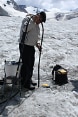
Di fronte allo scioglimento dei ghiacciai in Asia centrale c’è bisogno della massima cooperazione
01.05.2017
- 28.02.2025
Come rispondere al fabbisogno d’acqua di 68 milioni di abitanti dell’Asia centrale valorizzando al contempo i grandi ghiacciai del Kirghizistan, del Tagikistan, dell’Uzbekistan e del Kazakhstan? Un progetto della DSC promuove una cooperazione regionale su base volontaria e un rigoroso monitoraggio scientifico della trasformazione dei ghiacciai.
| Paese/Regione | Tema | Periodo | Budget |
|---|---|---|---|
|
Asia centrale |
Altro Acqua nothemedefined
Sector not specified
Diplomazia e sicurezza dell'acqua
Politica del settore idrico
Conservazione delle risorse idriche
Igieniche d'aqua
|
01.05.2017 - 28.02.2025 |
CHF 1’478’500 |
Progetto concluso
SSD NP: Preventing Violence and Building Safer Communities in the Sobat Corridor
01.05.2017
- 28.02.2019
This is the second phase of a project in the Sobat Corridor implemented by NP, aimed at improving the safety of civilians and further enhancing the communities’ capacity to prevent and respond to threats, through nonviolent conflict resolution and self-protection options. This includes direct protection activities such as accompaniments for vulnerable groups, trainings and awareness rising campaigns on protection, mediation, as well as protection mainstreaming and aid coordination.
Progetto concluso
Medical Education Reforms in Kyrgyzstan
01.05.2017
- 31.08.2021
Although health sector reforms have prioritised family medicine, the medical education system continues to prepare narrow specialists, leading to a shortage of family doctors mainly in rural areas. The Ministry of Health initiated the medical education reforms with focus on family doctors specialty at pregraduate level and compulsory postgraduate clinical practice in the regions. Phase II of the project will finalize the medical education reform implementation process with focus on postgraduate and continuous medical education.
Progetto concluso
Swiss Cooperation Office in Cuba - Food Aid Swiss Dairy Products (Cuba)
01.05.2017
- 31.07.2018
Through the usage of food aid in the form of Swiss dairy products, Swiss Humanitarian Aid contributes to the prevention and treatment of malnutrition, undernourishment, and disease. The SDC’s Humanitarian Aid administers the credit granted by parliament for a yearly amount of some CHF 20 million destined for the purchase of Swiss dairy products and their use for the benefit of the needy. Its task is to ensure a sustainable, targeted, and closely monitored food aid.
Progetto concluso
SUPIC – Support to the Parliament in Cambodia
01.05.2017
- 31.03.2021
The Parliamentary Institute of Cambodia (PIC) supports parliaments in Cambodia and in the wider region to build capacities towards effective democratic institutions and promoting accountability. The Swiss contribution to the PIC will support democratic development processes as a key element for sustainable poverty reduction, and peace and stability in the country and in the region.
Progetto concluso
Réhabilitation des écosytèmes dégradés - projet pilote
01.05.2017
- 31.12.2018
Progetto concluso
Municipal Economic Development in Eastern Serbia
01.05.2017
- 31.12.2021
The Project will scale up successful experience of property tax collection to 1/3 of Serbian municipalities. The municipalities will be able to increase own revenue and use it to fund services and communal intrastructures for citizens and businesses. lmproved taxation will also lead to a better interaction between citizens and local governments on investment priorities. Policy dialogue will work on simplifying local government tax laws and making them fairer and more transparent.